Schedule 1
Which buildings does Martyn's Law apply to?
The Terrorism (Protection of Premises) Act 2025 lists seventeen kinds of use. This page sets out each one with everyday examples, explains the 200-person test, and lists the premises that are not covered.
Common types of venue covered by Martyn's Law
Each is covered when it is reasonable to expect 200 or more people at the same time, from time to time.
Pubs and bars
Churches and places of worship
Village halls and community centres
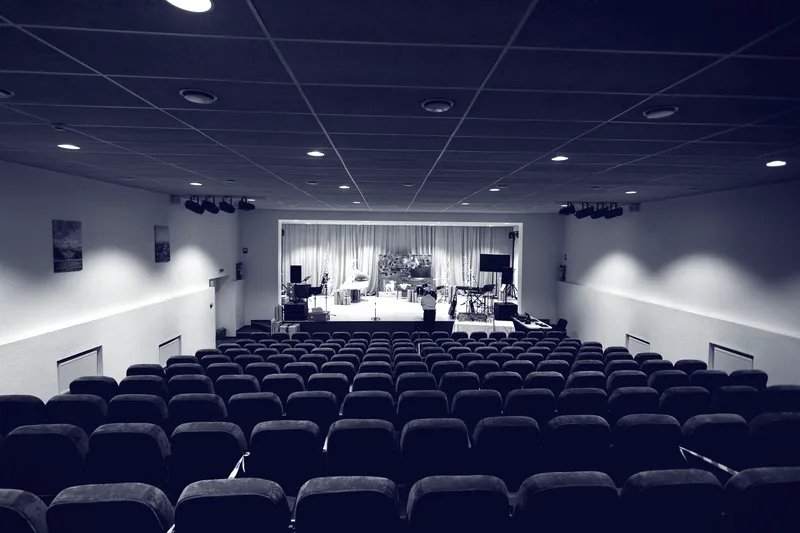
Small theatres and performance spaces
Sports clubs and leisure
Gyms, shops, nurseries and school halls
Anywhere it is reasonable to expect 200 or more people at the same time.
How to tell if your building is covered
Your premises are covered by Martyn's Law if three things are true. First, they are a building, or a building with land that goes with it, such as a beer garden. Second, the building is wholly or mainly used for one of the seventeen uses below, and members of the public come in for that purpose. Third, it is reasonable to expect 200 or more people there at the same time, from time to time, counting staff and volunteers as well as the public.
People still count as members of the public if they have to pay, hold a ticket or pass, or be a member or guest of a club. A members' club or a ticketed venue is not excluded for that reason.
Most covered premises are standard tier when 200 to 799 people can be expected, and enhanced tier at 800 or more. To check your own building, use the free checker.
The seventeen uses listed in Schedule 1
Para 1
Shops and services
Supermarkets, high-street shops, department stores, garden centres, shopping centres, banks and building societies, post offices, hairdressers and salons, estate agents and phone shops: any premises where the public come in to buy goods or a service.
Para 2
Food and drink
Pubs, bars, restaurants, cafés, nightclubs, social clubs, working men's clubs and food halls: anywhere food or drink is sold mainly to be consumed on the premises.
Para 3
Entertainment and leisure
Cinemas, theatres, concert venues, comedy clubs, bingo halls, bowling alleys, arcades, gyms and fitness centres, swimming pools, leisure centres, soft play, trampoline parks, escape rooms, dance halls, snooker clubs and casinos.
Para 4
Sports grounds
Football, rugby, cricket and athletics grounds and stadiums, racecourses, and any ground within the Safety of Sports Grounds Act 1975.
Open-air grounds with no ticket, payment or membership checks on entry are excluded under Schedule 2. A clubhouse is a building and can be covered in its own right.
Para 5
Libraries, museums and galleries
Public libraries, museums, art galleries, archives and heritage centres, including some outdoor exhibition sites.
Para 6
Halls, exhibition centres and conference venues
Village halls, community centres, church halls and scout and guide huts that are hired out, exhibition halls, conference centres, and wedding and function venues: any venue for hire used by the public.
Para 7
Visitor attractions
Stately homes, castles, historic houses and gardens, zoos and wildlife parks, theme parks, aquariums, science and discovery centres, and heritage railways.
Para 8
Hotels, hostels and holiday parks
Hotels, inns with rooms, hostels, and holiday parks and camping sites with buildings.
Para 9
Places of worship
Standard tier at any sizeChurches, chapels, cathedrals, mosques, synagogues, gurdwaras, mandirs, temples and meeting houses: any premises used for communal worship or other communal religious practice.
The standard tier rule applies only where worship is the principal use. A historic church or cathedral that also welcomes paying visitors stays here as long as worship remains its main use.
Para 10
Health care
Hospitals, GP surgeries, health centres, dental practices, clinics, walk-in centres and hospices.
Para 11
Bus, coach, railway and tram stations
Railway stations, bus and coach stations, tram and light rail stations, and underground stations.
Some transport premises already under other security regimes are excluded under Schedule 2.
Para 12
Aerodromes
Airports and airfields, other than those used only for military purposes.
Para 13
Nurseries and childcare
Standard tier at any sizeDay nurseries, pre-schools, playgroups, registered childcare settings, and after-school and holiday clubs run as childcare.
Para 14
Primary and secondary schools
Standard tier at any sizeState and independent primary, secondary and all-through schools, special schools, academies and free schools, including sixth forms that are part of a school.
Para 15
Further education
Standard tier at any sizeFurther education colleges, sixth-form colleges and post-16 education and training providers.
Para 16
Higher education
Universities and other higher education institutions, including student accommodation managed by or on behalf of the institution.
The normal tiers apply: 200 to 799 is standard tier, 800 or more is enhanced tier.
Para 17
Public authority buildings
Council offices open to the public, job centres, courts, register offices and other premises where a public authority provides facilities or services to visiting members of the public, unless another use above applies.
For this use, the public authority is the responsible person.
Which premises are standard tier at any size?
Four uses are treated differently. Places of worship, nurseries and childcare settings, primary and secondary schools, and further education colleges are standard tier whatever the number of people, as long as 200 or more can be expected. A cathedral or a school with 1,500 pupils has the same standard tier duties as a small chapel or primary school. Events held at these premises are not qualifying events either.
Higher education does not get this treatment. A university building where 800 or more people can be expected is enhanced tier. Read our guide for churches and places of worship for more.
How are mixed-use buildings treated?
If a building is used mainly for something not on the list, such as private offices, a factory, a warehouse or flats, it is not covered. Where part of the building has a listed use with 200 or more people, such as a ground-floor café or a public hall, only that part counts. When you work out your numbers, count only the people in the public-facing part. Our guide to working out your capacity explains how.
Which premises are not covered by Martyn's Law?
Schedule 2, Part 1
- Parliament, the devolved legislatures and their premises.
- Open-air parks, gardens, recreation grounds, sports grounds and other open-air leisure premises where there are no ticket, payment or membership checks on entry.
- Transport premises already covered by existing aviation, maritime or rail security regimes.
- Buildings used mainly for something not on the list, such as private offices, factories, warehouses and flats, unless part of the building has a listed use with 200 or more people. Then only that part counts. (These are not Schedule 2 exclusions: they fall outside the Act because their use is not listed in Schedule 1.)
When does an event count as a qualifying event?
800 or more
An event can have enhanced duties of its own when it is held somewhere that is not enhanced tier premises, such as a field, a park or a venue for fewer than 800. A qualifying event is one where the public have access, 800 or more people are expected at some point and there are ticket, payment or membership checks on entry. If events of that size come round regularly at a venue, the Home Office's examples treat the venue itself as enhanced tier instead, as with a pub that holds an annual festival. Events held at places of worship or education settings are not qualifying events. The pack is not designed for qualifying events.
Questions about which buildings are covered
Is a church hall covered as a place of worship?
Not usually. A church hall mainly hired out to the public falls under halls and venues for hire, which follows the normal tiers. The statutory guidance gives a similar example: a community centre hall that also hosts overflow Friday prayers is not principally a place of worship, so the special rule does not apply. If the hall is part of the church building and used mainly alongside worship, it may form part of the same premises. Look at how the building is actually used, and check the statutory guidance if you are unsure.
Are open-air sports pitches covered?
An open-air ground with no ticket, payment or membership checks on entry is excluded. A clubhouse, bar or changing block is a building, though, and can be covered if 200 or more people can be expected there.
Our members' club only admits members and guests. Does it count?
Yes. People still count as members of the public if they have to be a member or guest, hold a ticket or pay to enter.
Does a university get the same treatment as a school?
No. Schools and further education colleges stay standard tier at any size. Universities and other higher education institutions follow the normal tiers, so they can be enhanced tier at 800 or more.
Not sure which use applies to your building?
The free checker asks six questions and tells you your likely tier.